
Follow for follow is rarely used because it’s the best growth strategy. Most creators turn to it when progress feels stalled and nothing else seems to move the needle. You follow someone, get a follow back, see a number change—and that immediate feedback creates a powerful sense of momentum.
That feeling is why follow for follow keeps resurfacing. Its survival has less to do with algorithms and more to do with psychology: the need for control, certainty, and visible progress. This article breaks down why those instincts make follow for follow tempting—and why they consistently conflict with how social platforms actually measure growth.
Why Follow for Follow Feels So Tempting ?
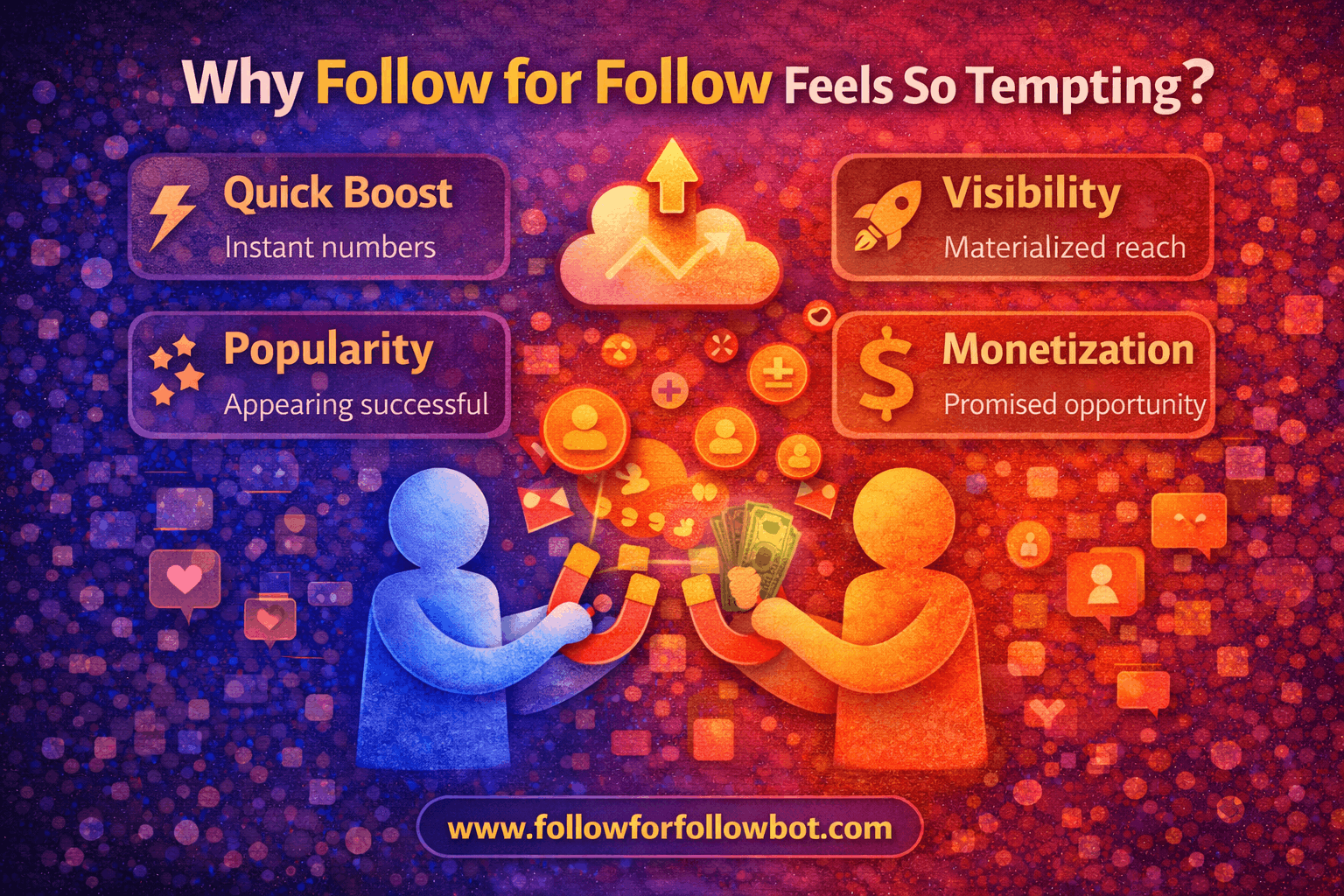
Organic growth is psychologically uncomfortable because it breaks one of the brain’s core expectations: effort should lead to outcome.
On social platforms, that relationship is unstable. You can publish high-quality content, follow best practices, stay consistent—and still see wildly inconsistent results. Some posts get traction. Others disappear. From the creator’s perspective, this unpredictability creates a sense of powerlessness. You’re putting energy in, but the system doesn’t reliably respond.
That uncertainty is what hurts.
Follow for follow steps in as a psychological relief mechanism. It restores a clear cause-and-effect loop: I act, something happens. You follow someone, a notification appears, a number increases. The feedback is immediate, visible, and attributable directly to your action.
This matters more than people realize.
When outcomes are uncertain, the human brain prioritizes immediacy over accuracy. A fast signal—even a low-quality one—feels more reassuring than a delayed or ambiguous signal. Follow for follow satisfies that need perfectly. It doesn’t require patience, interpretation, or trust in invisible systems. Progress feels tangible.
That’s why creators rarely adopt follow for follow when growth is healthy. They turn to it when growth slows, when reach becomes inconsistent, and when posting starts to feel like shouting into a void. In that context, follow for follow isn’t chosen because it’s smart—it’s chosen because it reduces anxiety.
It gives the illusion of momentum when real momentum is hard to feel.
The Reciprocity Bias: “I Followed You, You Owe Me”
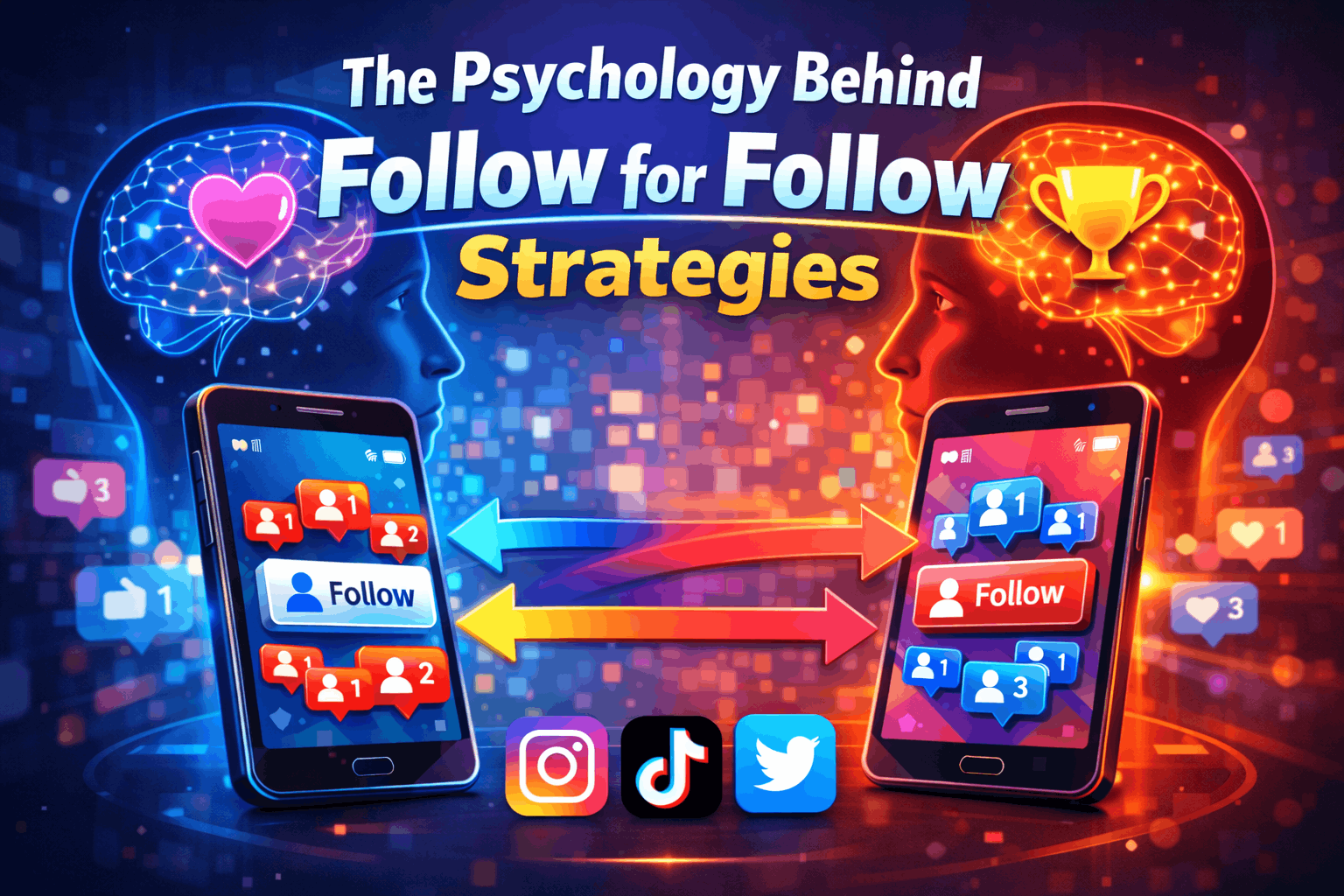
At the core of follow for follow is one of the strongest social instincts humans have: reciprocity.
From a very early age, we’re conditioned to return favors. When someone gives us something—even something small—we feel a subtle obligation to give something back. On social platforms, a follow functions as that “something.” It’s framed as attention, recognition, or goodwill.
Following back feels polite. Not following back feels awkward.
Follow for follow exploits this instinct by turning social norms into a growth mechanism.
But here’s the critical disconnect: reciprocity is a social signal, not an interest signal.
When someone follows you out of obligation, they’re not expressing curiosity about your content. They’re responding to a social cue. That response might look identical on the surface a follow is a follow but the motivation behind it is completely different.
Algorithms are designed to detect that difference indirectly.
They don’t evaluate intent. They evaluate behavior. What happens after the follow? Does the person stop scrolling when your content appears? Do they watch, read, reply, save, or return later? Or do they treat your posts as background noise?
Reciprocity-driven follows almost always produce weak post-follow behavior. Engagement drops off quickly because there was no intrinsic interest to sustain it. From the platform’s perspective, the connection fails its confirmation test.
This is why follow for follow creates such a deceptive experience for creators. Socially, the exchange feels successful. Algorithmically, it’s empty.
Reciprocity creates compliance. Algorithms reward interest.
When growth strategies confuse those two signals, they feel productive to humans while quietly teaching the system that the content isn’t worth showing.
Dopamine Loops and Vanity Metrics
Follower count is one of the most addictive vanity metrics in social media—not because it reflects value, but because it delivers instant neurological reward.
The number updates immediately. It’s publicly visible. And every increase, no matter how meaningless, triggers a small dopamine release in the brain. That release reinforces the behavior that caused it. Follow for follow is exceptionally effective at feeding this loop because it converts effort directly into visible numerical change.
But dopamine is not progress.
Metrics that actually drive long-term reach engagement quality, audience relevance, trust signals compound slowly and invisibly. They don’t spike. They don’t notify you. They don’t reward you immediately. Psychologically, that makes them much harder to pursue, even though they’re far more valuable.
This is where creators get trapped. They confuse movement with improvement. Follow for follow creates constant movement. It almost never creates structural improvement.
The Illusion of Control in Social Growth
Another reason follow for follow feels appealing is that it restores a sense of control.
Content performance depends on variables creators can’t fully manage: audience mood, distribution tests, competing content, timing, and platform experiments. Even good content can underperform. That lack of control is frustrating.
Follow for follow replaces that uncertainty with a controllable action: how many people you follow today.
That sense of control is calming. It feels productive. But it’s deceptive.
Instead of asking, “Who is this content actually resonating with?” creators start asking, “How many people can I follow today?” The focus shifts from output quality and audience alignment to activity volume.
Control over the wrong input doesn’t improve outcomes. It only delays clarity about what’s actually working.
Why the Brain Loves Short-Term Signals ? (and Platforms Don’t)
Human psychology evolved to prioritize immediate rewards. Social platforms evolved to prioritize predictive accuracy.
This creates a fundamental mismatch.
Follow for follow produces fast, visible signals that satisfy the brain’s need for feedback. Platforms, however, evaluate growth through repeated behavior over time. They care about confirmation: Do users return? Do they engage consistently? Does interest persist beyond the initial connection?
Short-term spikes don’t help systems designed to optimize for long-term satisfaction.
That’s why follow for follow often appears to “work” briefly and then stops. The brain celebrates the spike. The algorithm waits for confirmation. When confirmation doesn’t arrive, distribution quietly tightens.
No punishment is needed. The system simply becomes less willing to take risks.
The Psychological Cost of Audience Mismatch
One of the most damaging effects of follow for follow isn’t algorithmic—it’s emotional.
When creators accumulate followers who don’t care about their content, posts start getting ignored. Engagement drops. Reach declines. From the creator’s perspective, it feels like something is wrong with the content itself.
That perception triggers self-doubt.
Creators start over-posting, changing formats constantly, chasing trends, or questioning their creative ability. In reality, the problem isn’t creativity or effort. It’s audience alignment. The people following were never interested in the first place.
Follow for follow builds an audience that doesn’t reflect genuine interest. Over time, this erodes confidence and decision-making, making growth feel far harder than it actually is.
Why Follow for Follow Persists Even After It Stops Working?
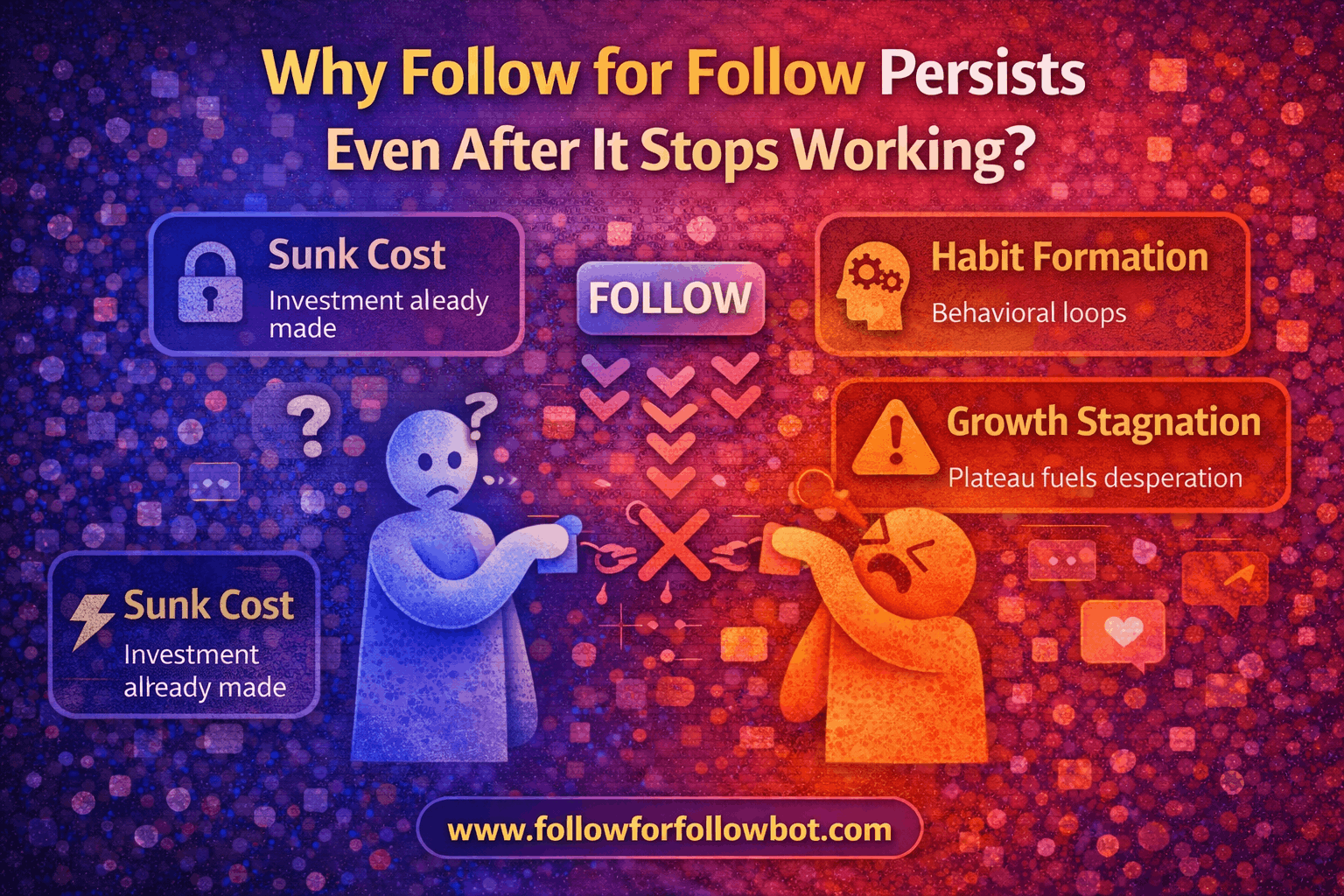
Follow for follow almost never collapses in a way that forces a clear decision. It doesn’t trigger a hard failure, a warning, or an obvious penalty. Instead, it produces a slow erosion: slightly lower reach, weaker engagement, fewer meaningful responses. Nothing breaks—but nothing improves either.
Psychologically, this is the worst possible failure mode.
Humans are bad at abandoning systems that decline gradually. When progress slows instead of stopping, the brain interprets it as fixable, not flawed. Creators don’t conclude that the strategy is wrong; they assume something adjacent needs adjustment. Maybe posting time. Maybe content style. Maybe the tool being used.
This is where sunk-cost thinking takes hold. The larger the follower count becomes, the harder it feels to walk away from the method that built it—even if that method is now undermining performance. The question shifts from “Is this working?” to “How do I make this work better?”
Platforms, however, don’t reason this way.
Algorithmic systems don’t reassess intent emotionally. They accumulate evidence. Early signals—who follows, how they behave, whether they engage—shape future distribution logic. When a system repeatedly observes followers who don’t interact, it doesn’t wait for improvement. It adjusts risk tolerance. Content gets tested less aggressively. Discovery slows.
From the creator’s perspective, this feels confusing and unfair. Nothing changed. No rules were broken. Yet reach keeps tightening.
That confusion drives tool-hopping.
Instead of questioning the growth logic, creators look for cleaner execution: slower follow rates, safer automation, better proxies, more “human” behavior. The behavior stays the same. Only the wrapper changes. But systems don’t evaluate polish—they evaluate outcomes.
This is why follow for follow persists. Not because it works, but because it fails quietly, rewards effort with visible numbers, and gives just enough hope to keep people repeating it—long after the strategy has stopped aligning with how platforms actually measure value.
What Healthy Growth Psychology Looks Like Instead?
Healthy growth is quieter and less emotionally stimulating.
It prioritizes relevance over reciprocity, confirmation over obligation, and consistency over spikes. Psychologically, this requires tolerating slower feedback and trusting compounding signals—something that feels uncomfortable but works structurally.
Creators who make this shift stop asking, “How do I get more followers?” and start asking, “How do I help the right people discover and confirm interest in my content?”
That question aligns with both human attention and platform incentives.
And when psychology and systems move in the same direction, growth stops feeling like a fight.
Where Tools Fit (and Where They Don’t) ?
Tools don’t ruin accounts. What ruins accounts is bad growth logic executed at scale.
Automation becomes dangerous only when it’s used to bypass relevance instead of reinforcing it. Blindly automating follow for follow doesn’t just repeat a weak tactic—it magnifies every psychological shortcut behind it. More irrelevant followers, more ignored impressions, more noisy signals fed back into the system. The result isn’t punishment, but accelerated trust erosion.
This is why the problem is rarely “automation” itself. It’s what is being automated.
When tools are used to manufacture numbers—follows without interest, engagement without intent—they amplify audience mismatch faster than a human ever could. Platforms don’t need to intervene. Distribution simply tightens because the data being produced is low-confidence.
MP Suite was built around the opposite assumption.
Instead of automating follow-for-follow loops, it focuses on what happens after relevance is demonstrated. Reinforcing engagement, continuity, and repeat interaction—signals that both algorithms and real users interpret as genuine interest. In that context, automation doesn’t replace judgment; it extends it.
When automation amplifies intent rather than shortcuts psychology, growth stops fighting the system and starts aligning with it. That’s where tools actually belong.
Conclusion
Follow for follow survives because it feels good, not because it works.
It satisfies the brain’s need for control, feedback, and visible progress—but it conflicts with how platforms evaluate relevance and trust. Over time, that conflict shows up as weaker engagement, slower discovery, and growing frustration.
Real growth requires resisting short-term psychological rewards in favor of long-term signal alignment. That’s not easy—but it’s the difference between numbers that look impressive and growth that actually compounds.