
Creators usually start comparing follow for follow and organic growth when something feels off. Reach becomes inconsistent. Engagement drops without a clear reason. Content quality improves, but results do not follow. In that moment, growth stops feeling predictable, and every option starts to look equally uncertain.
This comparison is often misunderstood as a choice between two tactics. In reality, it is a comparison between two systems. One system optimizes for visible numbers. The other optimizes for behavioral signals. This article breaks down how each system works, why they produce very different outcomes over time, and which one actually wins when platforms decide what deserves distribution.
What Creators Mean by Follow for Follow Growth?
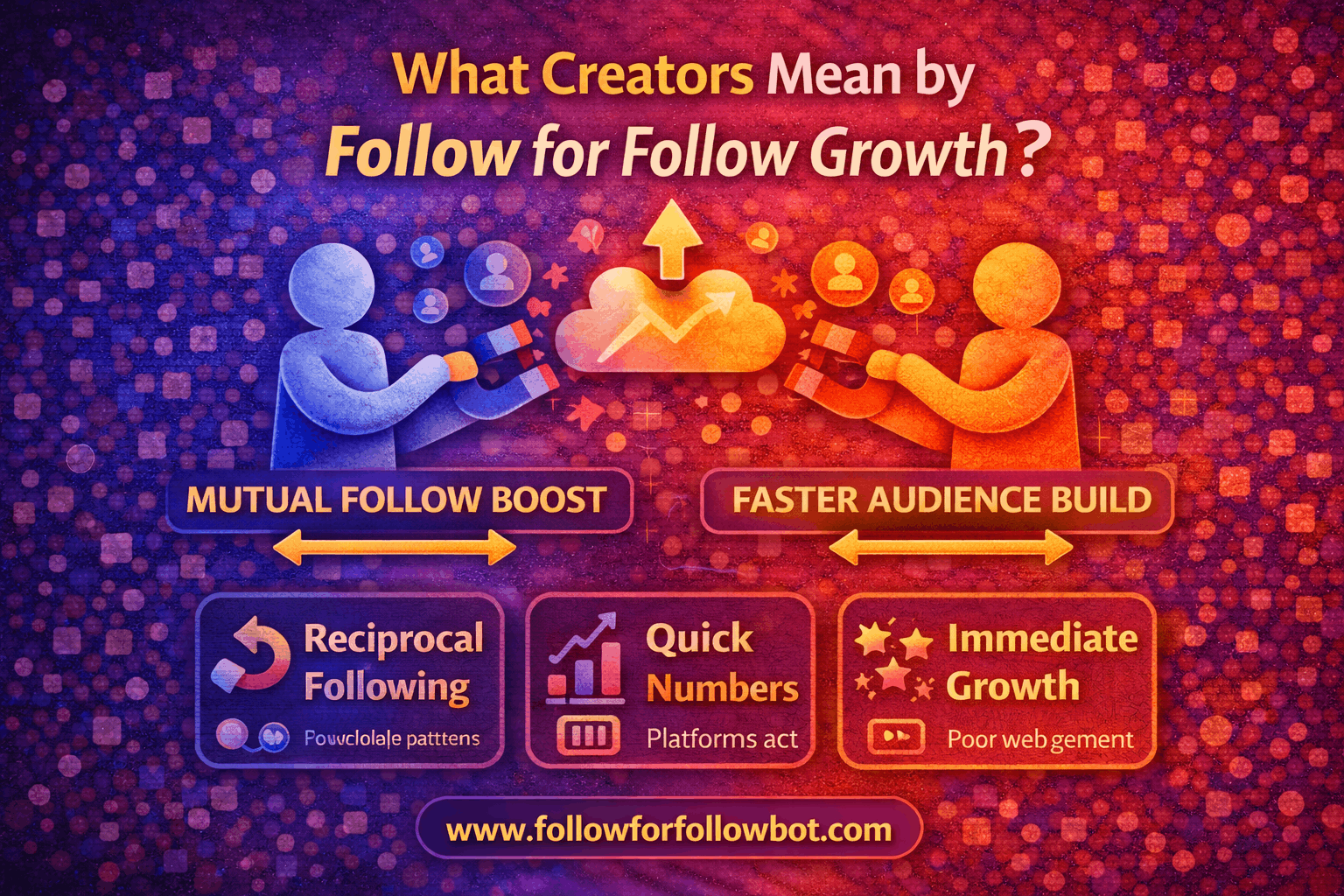
When creators talk about follow for follow growth, they are rarely describing intentional relationship building. In theory, follow for follow suggests two accounts discovering each other through shared interests and choosing to stay connected. In practice, it almost never looks like that.
Most follow for follow activity is procedural. It includes mass following accounts within a niche, expecting silent follow backs. It shows up as comments like F4F or follow back under unrelated posts. It happens inside exchange groups or through automated follow and unfollow cycles designed to scale volume rather than relevance. The follow itself becomes the objective, not the relationship it represents.
Creators adopt this approach because it replaces uncertainty with immediacy. You take an action and something happens. Follower numbers increase. Profiles look more credible at a glance. Social proof improves without waiting for content discovery to do its work. When organic growth feels slow or inconsistent, those visible changes provide reassurance that progress is still happening.
The problem is that the metrics being optimized are surface level. Follower count and short term activity are easy to observe, so they become proxies for growth. What rarely gets measured is post follow behavior: whether new followers actually watch content, interact consistently, or return over time. Once the sense of obligation fades, interest is tested, and in most cases, it simply is not there.
From a platform perspective, that gap matters far more than the initial follow.
What Organic Growth Actually Means Today?
Organic growth is no longer about publishing content and hoping it finds an audience. Modern platforms treat every post as a test. Content is shown to a small group of users first, behavior is observed, and distribution only expands when interest is clearly demonstrated.
That interest is measured through signals, not assumptions. Watch time, saves, replies, profile clicks, repeat interactions, and return behavior all tell the system whether attention is real or superficial. A follow may start the relationship, but it is these behaviors that determine whether it continues.
Because organic growth relies on confirmation instead of exchange, it rarely produces sudden spikes. It builds gradually. Each confirmed interaction increases algorithmic confidence, which leads to broader testing and more consistent discovery. Over time, this compounding effect creates reach that is not just higher, but more stable and predictable.
Follow for Follow vs Organic Growth – Signal Quality Comparison
At a surface level, follow for follow and organic growth can look similar. Both can increase follower count. Both can create moments of visible activity. But to an algorithm, they send completely different messages.
The difference is not subtle. It is structural.
Follow for Follow: Low-Confidence Signals
Follow for follow generates connections without proof of interest. The follow happens first, and the system waits for behavior to justify it.
In most cases, that confirmation never arrives.
Typical patterns look like this:
- A follow is exchanged out of obligation, not curiosity
- Content appears in the new follower’s feed and is skipped
- Watch time is short or nonexistent
- Likes are occasional, comments are rare, saves almost never happen
- Interaction does not repeat
From the platform’s perspective, this is a weak relationship. The system tested exposure, received little response, and learned that the connection has low predictive value.
One weak signal is not a problem. Hundreds of them are.
Over time, the algorithm stops treating new follows as meaningful. It becomes cautious about testing content broadly, because previous tests tied to similar audiences underperformed.
Organic Growth: High-Confidence Signals
Organic growth works in the opposite direction. Interest comes before the follow, not after.
The system sees:
- Users watching content without being prompted
- Meaningful dwell time or full video completions
- Saves, replies, or profile clicks
- Repeated exposure and return behavior
- A follow that confirms an existing pattern
Here, the follow is not a hypothesis. It is a conclusion.
This is exactly what algorithms are built to reward. When behavior consistently confirms relevance, confidence increases. Higher confidence leads to wider testing. Wider testing leads to stronger discovery. Growth compounds because each signal reinforces the next.
Why This Difference Decides Reach
Algorithms do not reward the action of following. They reward predictive accuracy.
Follow for follow teaches the system that follows do not reliably lead to engagement. Organic growth teaches the system that engagement reliably leads to follows. Those are two completely different lessons, and they produce completely different outcomes.
This is why accounts built on follow for follow often feel stuck despite having large audiences, while smaller organic accounts continue to expand. One system is built on obligation. The other is built on interest.
And algorithms only trust one of them.
Short Term Wins vs Long Term Consequences
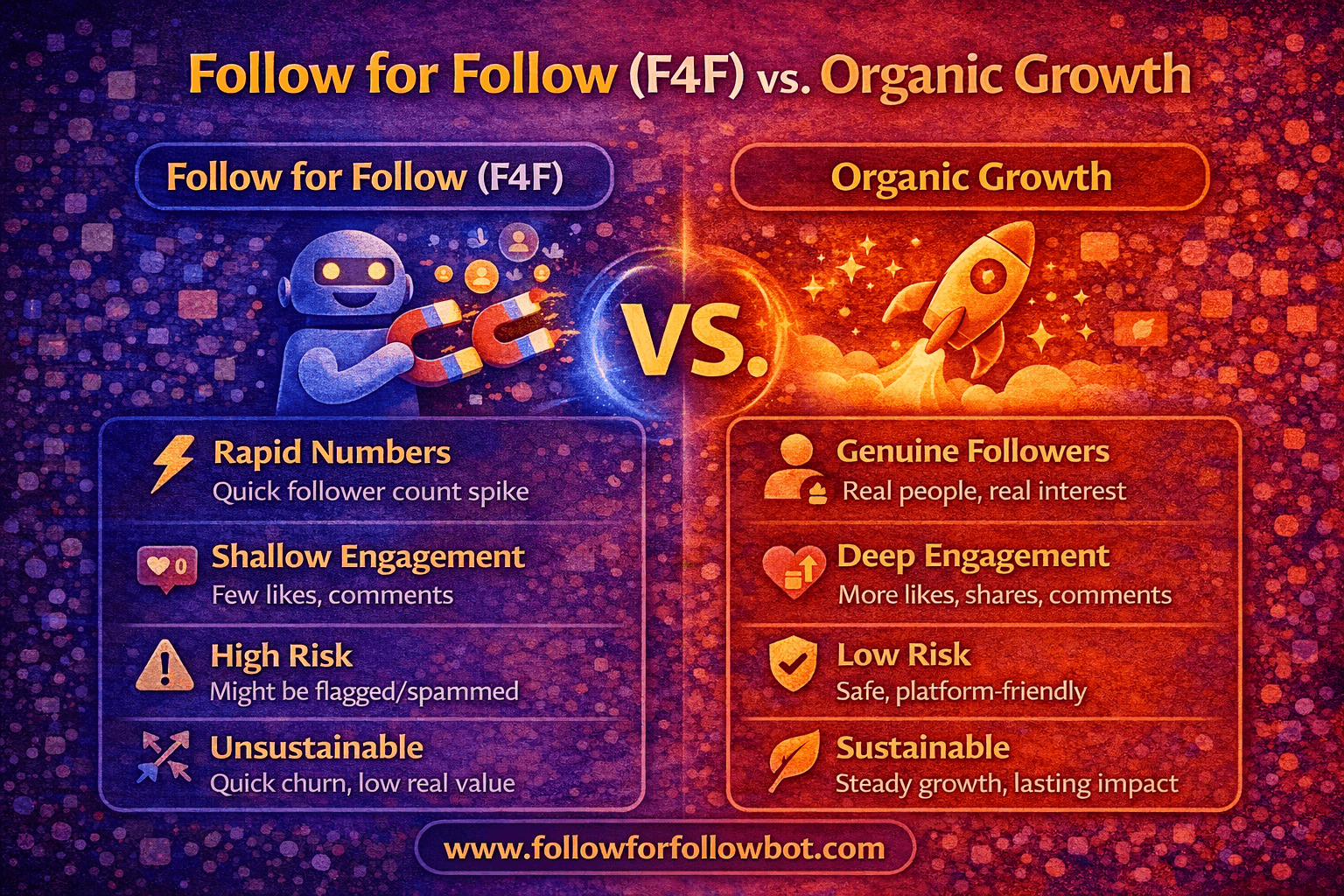
Follow for follow and organic growth create very different emotional experiences for creators, especially in the early stages. One feels fast and reassuring. The other feels slow and uncertain. That contrast is exactly why so many people choose the wrong one.
Why Follow for Follow Feels Like It’s Working
Follow for follow delivers immediate feedback. You take an action and something happens right away.
- Follower count increases quickly
- Notifications appear
- Profiles look more established
- Early likes or comments create visible activity
For small or stalled accounts, this feels like momentum. The brain interprets movement as progress, even when the movement is superficial. That sense of control and speed is powerful, especially when organic reach feels inconsistent or unpredictable.
At this stage, nothing appears broken. In fact, things appear better than before.
How Engagement Slowly Starts to Decay?
The problem is not what happens immediately after the follow. The problem is what stops happening afterward.
As the audience grows through reciprocity instead of interest:
- New followers stop engaging after the first interaction
- Watch time drops as content is ignored in feeds
- Engagement becomes inconsistent and shallow
- Reach per post begins to contract
- Discovery tests become smaller and less frequent
This decline is gradual, not dramatic. That makes it easy to miss and hard to diagnose. Creators often respond by posting more, changing formats, or chasing trends, without realizing the underlying issue is audience mismatch.
Growth becomes harder not because effort decreased, but because trust eroded.
Why Organic Growth Feels Slow but Builds Strength?
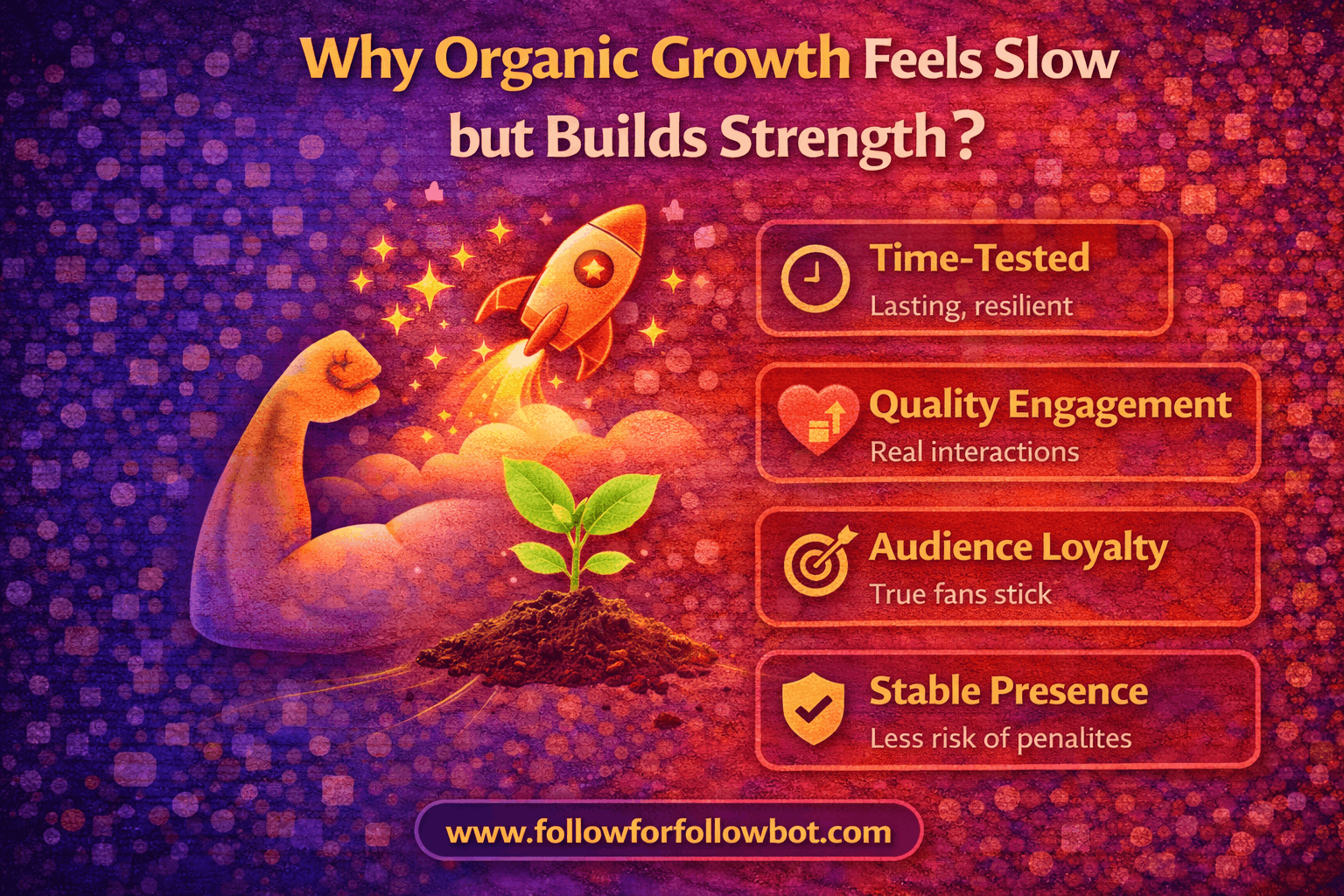
Organic growth is frustrating at the beginning because feedback is delayed. You can publish strong content and see little response. Fewer numbers move. Progress feels invisible.
But when engagement does happen, it compounds.
- Each interaction confirms relevance
- The algorithm gains confidence in audience fit
- Reach becomes more predictable over time
- Engagement density increases instead of thinning
- Discovery expands instead of tightening
Organic growth does not spike. It stabilizes.
What looks like slow progress early becomes structural advantage later. Instead of constantly fighting for attention, the system starts working with you, because past behavior has proven that your content belongs where it is shown.
The Tradeoff Most Creators Miss
Follow for follow trades long term distribution for short term reassurance. Organic growth trades early certainty for lasting leverage.
One feels good quickly and collapses quietly.
The other feels uncomfortable early and strengthens over time.
That difference is not about tactics. It is about how systems learn and what they choose to trust.
Why Follow for Follow Often Damages Organic Reach?
The core problem with follow for follow is not the follow itself. It is the audience it creates.
Follow for follow connects accounts based on obligation, not interest. Two users are linked even though they may care about completely different topics, formats, or content styles. On the surface, this looks harmless. Under the hood, it quietly breaks how organic distribution is supposed to work.
Audience Mismatch Is a Distribution Problem
When you publish content, platforms do not show it to all followers equally. They test it first with a small sample of people who are statistically likely to respond. If that test group ignores the content, distribution slows or stops.
With follow for follow, a large portion of your follower base has no real reason to care about what you post. So when your content enters their feed:
- They scroll past without stopping
- They do not watch, save, or reply
- They rarely interact a second time
From the platform’s perspective, this looks like a clear signal: showing this content to these users does not work.
The system does not know why the mismatch exists. It only sees the outcome.
How This Reduces Organic Reach Over Time
As this pattern repeats, the algorithm adapts in predictable ways:
- Engagement becomes inconsistent because only a small fraction of followers respond
- Initial test groups underperform, so expansion is limited
- The system lowers confidence in your audience fit
- New content is tested more cautiously and with fewer users
This feels like declining reach, but it is actually declining trust.
Nothing is being punished. No rules are broken. There is no shadowban. The platform is simply minimizing risk by reducing how often it experiments with your content.
Why the Damage Is Easy to Miss ?
This is what makes follow for follow so deceptive.
Follower count continues to rise, which creates the impression of growth. But at the same time, average engagement per post slowly drops. Because the decline is gradual, creators often blame content quality, timing, or platform changes instead of audience composition.
By the time the pattern is obvious, the system has already learned that your followers are a low-confidence testing pool.
This dynamic, and why it leads to shrinking reach even as accounts get larger, is explained in depth in the Follow for Follow Guide. It is one of the most common reasons creators feel stuck despite “doing everything right.”
The reach problem is not effort.
It is alignment.
And follow for follow breaks alignment at the foundation.
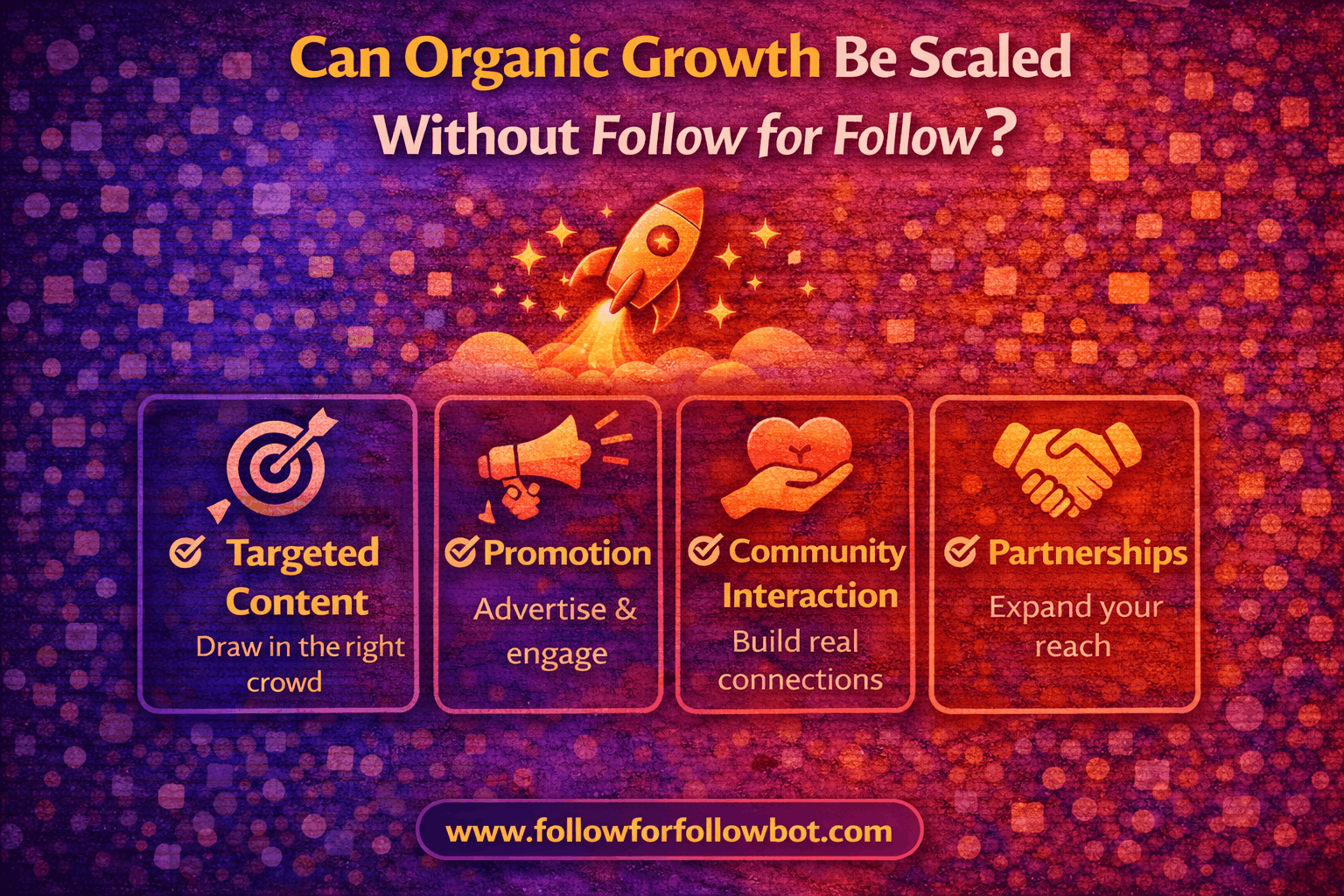
Can Organic Growth Be Scaled Without Follow for Follow?
This is the point where most creators hit real frustration.
They understand that follow for follow damages engagement, but pure organic growth feels painfully slow. Being told to “just post more” or “wait for the algorithm” does not solve the problem, because volume by itself does not create relevance. More content shown to the wrong people simply produces more weak signals.
The real bottleneck is not effort. It is discovery efficiency.
Why Organic Growth Feels Unscalable ?
Organic growth depends on the platform learning who your content is for. That learning happens through repeated testing and behavioral confirmation. When those tests are slow, inconsistent, or noisy, growth feels random.
Creators often misinterpret this as a content issue, when it is actually a distribution issue.
Good content can still struggle if the system does not get enough clean signals early on. Without help, platforms take a cautious approach. They test slowly, limit exposure, and wait for clear evidence before expanding reach.
This is why organic growth feels like waiting in the dark.
What Actually Scales Organic Growth ?
Scaling organic growth does not mean forcing connections. It means accelerating clarity.
What works is intent based systems. Systems that help platforms answer these questions faster:
- Who is already engaging with similar content?
- Which users are likely to respond beyond a single interaction?
- Where does interest repeat, not just appear once?
When those questions are answered more efficiently, organic growth compounds instead of stalling.
The key distinction is this: you are not replacing relevance, you are reinforcing it.
Why This Is Different From Follow for Follow ?
Follow for follow tries to manufacture signals before interest exists. Intent based growth strengthens signals after interest is demonstrated.
One creates noise. The other creates confirmation.
This is where many creators go wrong. They assume scaling requires shortcuts, when in reality it requires structure. Organic growth can be scaled, but only when the system is fed better inputs, not more random ones.
Scaling relevance is fundamentally different from scaling actions.
And that difference determines whether growth compounds or collapses.
Where Tools Fit in Follow for Follow vs Organic Growth ?
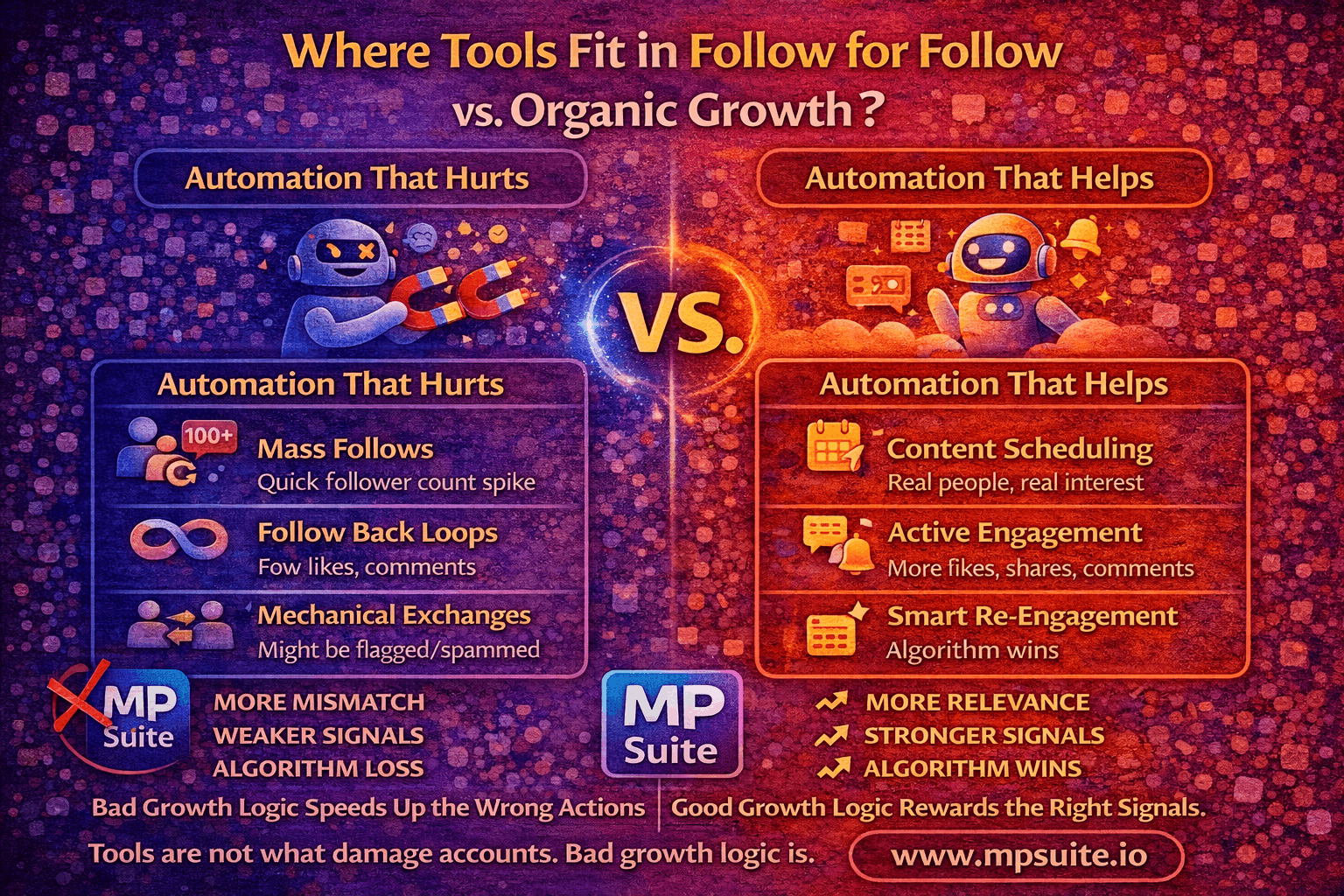
Tools are not what damage accounts. Bad growth logic is.
Automation only does what it is told to do. When it is used to scale follow for follow, it simply multiplies the same problem faster. More mismatched followers, weaker engagement, and quicker loss of algorithmic confidence. The tool is not the cause. The logic behind it is.
Automation That Hurts vs Automation That Helps
There are two very different ways automation shows up in social growth.
One approach automates connection before relevance exists. Mass follows, follow back loops, and mechanical exchanges try to force relationships first and hope engagement comes later. This creates noise, not signals. Platforms read it as low quality behavior and respond by tightening distribution.
The other approach automates what happens after interest is already visible. It supports consistency, responsiveness, and continuity. It helps creators stay present where engagement is happening instead of fabricating it where it is not.
Only one of these aligns with how platforms evaluate growth.
Where MP Suite Fits ?
This is exactly the gap MP Suite was built to address.
MP Suite is not designed to automate follow for follow loops or inflate surface level metrics. It is designed to reinforce post discovery behavior, the actions that confirm relevance after a user has already shown interest. That means strengthening engagement signals, not manufacturing them.
When automation is used to reduce friction around the right behaviors, organic growth becomes more scalable without becoming artificial.
Used correctly, tools do not replace relevance.
They protect it.
And when growth systems align with platform incentives instead of fighting them, scale becomes sustainable rather than fragile.
Conclusion
If winning means fast visible numbers, follow for follow wins early. If winning means reach, engagement, and sustainable visibility, organic growth wins decisively.
The real question is not which tactic is easier. It is which system teaches platforms to trust your content over time.
For a deeper breakdown of why follow for follow stopped aligning with modern platforms, start with the Follow for Follow Guide. If you are looking to scale organic growth without repeating the same mistakes, MP Suite exists to support that transition.